

Trishuli River Rafting — Nepal's Most Accessible White Water
Just a few hours from Kathmandu, Pokhara, and Chitwan, the Trishuli River offers real white water without the commitment of a full expedition. Born from the glaciers of Langtang and Gosaikunda — the mythical spring said to have flowed from Shiva's trident — the Trishuli carves through dramatic gorges along the Prithvi Highway, delivering Class II–III rapids, warm turquoise water, and long stretches of calm river to soak in the Himalayan foothills.
It's the river we recommend to first-time rafters, families, and anyone looking to add a day of adventure to a Kathmandu-Pokhara journey — without sacrificing the safety standards we hold on every river we run. Whether it's your first time on white water or your fiftieth, our guides bring the same rigor and equipment to Trishuli as they do to our highest-grade expeditions.
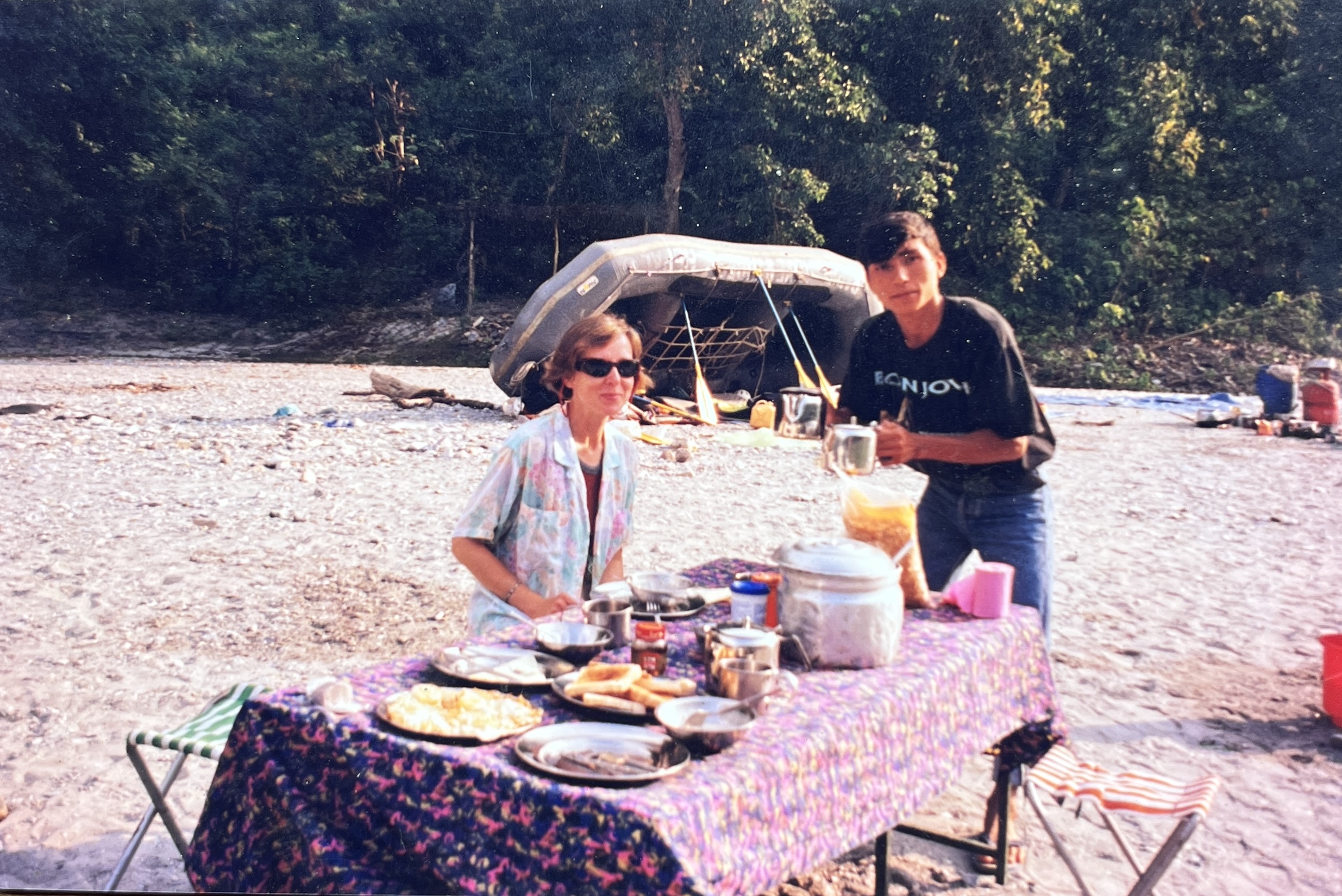
Runs from Malinga to Jawan Khola cover roughly 25 km and 3 hours on the water, with options to extend into a multi-day journey with riverside camping, bonfires, and slow mornings on the sand.
Best time to go: October to May, with peak conditions from October to December.
Trishuli River Rafting — Highlights
Hover over any day to see details
Nepal's most accessible white water, done properly.
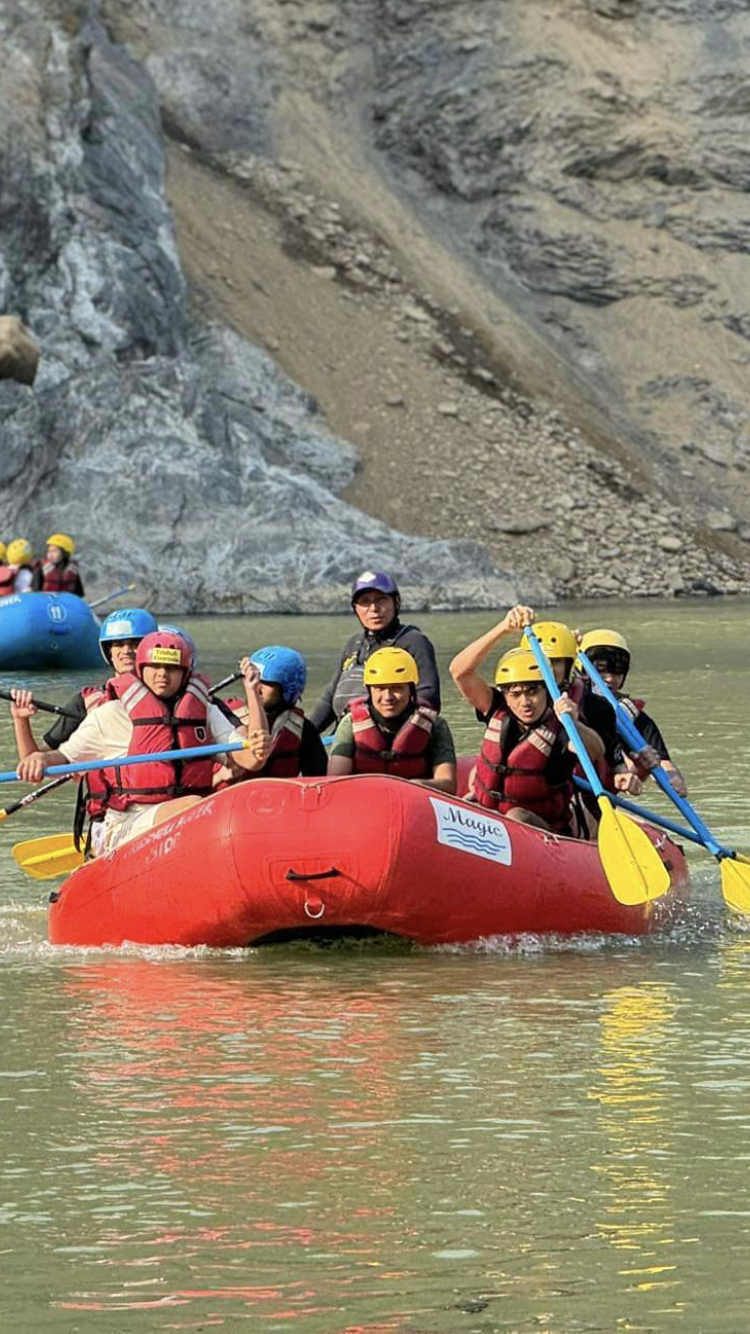
In the morning, you'll meet your OarPeak trip leader and fellow travelers in Kathmandu (or Pokhara/Chitwan, depending on your route) for the drive out to Malinga, Benighat — about 3 to 4 hours along the Prithvi Highway, with the road tracing the river for much of the way. At the put-in, your guides will fit you with a helmet and life jacket, run through a safety briefing, and get everyone settled into the raft.
The first stretch keeps you busy, with Welcome Rapid and Twins Rock setting the pace early on. In between, the river settles into calmer water, giving you a chance to look around at the hills and villages along the bank. Around midday, we'll stop at a sandy beach for lunch.
The afternoon brings the trip's two standout rapids, Ladies Delight and Landslide — quick, fun bursts of white water rather than anything overwhelming. If the weather's warm, there's time for a swim in one of the calmer pools before the final stretch toward Jawan Khola.
We'll pull in at Jawan Khola by late afternoon. After changing out of wet gear and grabbing a quick rest on the beach, you'll head onward to your next stop — Kathmandu, Pokhara, or Chitwan — wrapping up the day back on the road.
✓ SWR-certified rafting guide throughout
✓ Safety kayaker on every departure
✓ All rafting equipment — self-bailing raft, paddle, PFD, helmet
✓ Curated riverside lunch with dedicated staff
✓ OarPeak emergency first aid kit
✓ Pre-trip safety briefing and paddle orientation
✓ All ground transport (Hotel–River–Hotel)
✓ Secure storage for personal belongings
✓ Leave No Trace — dedicated waste management and river stewardship
– International flights
– Nepal entry visa
– Personal travel insurance
– Personal clothing and gear
– Alcoholic beverages
– Guide and crew gratuity
The Trishuli River is the heartbeat of Nepal’s whitewater legacy. Because the river is governed by seasonal flow cycles, understanding these shifts is paramount for logistics and safety. Here is the operational breakdown of river conditions:
| Expedition Window | River Dynamics & Safety | Daytime Air | Water Temp |
|---|---|---|---|
| 🍂 Autumn BestOct–Nov | Optimal Flow. High water levels from the monsoon recede into clear, powerful, and fun-filled rapids. | 18–28°C | 16–20°C |
| 🌸 Spring PrimeMar–May | Temperate Descent. Mild water temperatures and lush, green landscapes define these classic trips. | 20–32°C | 14–18°C |
| 🌧️ MonsoonJun–Sep | Safety Suspension. Rapidly changing volume and debris levels make navigation high-risk. Operations suspended. | 24–32°C | 18–22°C |
| ❄️ WinterDec–Feb | Refreshing Run. Lower, stable water levels. Perfect for focused paddling and calm, scenic river-side camping. | 12–22°C | 10–14°C |
Safety Briefing: We meet at our river base for a mandatory safety and paddle orientation. We’ll get you set up with your gear here.
ID Required: Please bring a valid photo ID for river registration.
On the River (Wear this):
• Footwear: Sturdy, closed-toe sandals or sports shoes (they will get wet).
• Clothing: Quick-dry synthetic shirt or rash guard (please avoid cotton).
• Sun Protection: Sunglasses with a strap and high-SPF sunscreen.
Optional Carry:
• Water Bottle: Feel free to bring a 1L reusable bottle if you prefer to have your own, though we provide fresh water throughout the day.
For After the Trip:
• Dry Clothes: Bring a full change of clothes and a towel to leave in the van for when we finish the river.
Dry Bags: We provide a high-quality dry bag for your personal items. Please keep your items in the raft light (under 2kg) to ensure the raft stays balanced.
Safety Gear: We provide your helmet, PFD (life jacket), and paddle. Please take care of them as if they were your own; standard care applies.
Pro-Tip: The Trishuli is a high-energy river. For the best experience, wear clothes you don’t mind getting completely soaked, and leave your valuables behind—we want you to focus entirely on the water.
Every OarPeak enquiry is answered by a guide — not a booking agent. Maximum 12 guests per departure.


Our standard run is one day: put-in at Malinga, take-out at Jawan Khola, covering about 25 km of river in roughly 3 hours on the water. It's a half-day paddle plus travel time from Kathmandu or Pokhara
One day covers the full Malinga-to-Jawan Khola stretch and is plenty if you're short on time. The 2-day version runs upper Trishuli on day one — a different, less-run section — then the standard main section on day two, with a night camped on the riverbank in between. Note: the 2-day trip needs a minimum of 3–4 people to run.
The 1-day trip runs regardless of group size. The 2-day trip (upper + main section) requires a minimum of 3–4 people to operate — but if you're a solo traveler or a smaller group, you can join one of our scheduled departures instead, where we combine guests into a single group trip so you're not stuck waiting to hit the minimum on your own.
Safety is the whole point of how we run trips — full stop. We don't cut corners on equipment, guide ratios, or river protocol, regardless of which river or grade you're on. Our guides are licensed and our standards don't change based on price point.
Yes — Trishuli is accessible white water and works well for first-timers and most families. For younger children or those looking for the gentlest possible introduction to rafting, we recommend our Lower Seti trip instead. On Trishuli, we set a minimum age of 8, ensuring every guest can actively follow safety instructions on moving water.
No. Trishuli is graded as accessible white water, which is exactly why we position it the way we do — it's a great first-timer river, but we still run it with the same safety standards we use on our bigger-grade trips. Accessible doesn't mean casual.
Autumn (Oct–Nov) is our top recommendation — post-monsoon water is at its most exciting without the unpredictability. Spring (Mar–May) is a close second for milder conditions. We suspend operations entirely during monsoon (Jun–Sep) — this isn't a caution, it's a hard stop, consistent with how we run every trip at OarPeak.