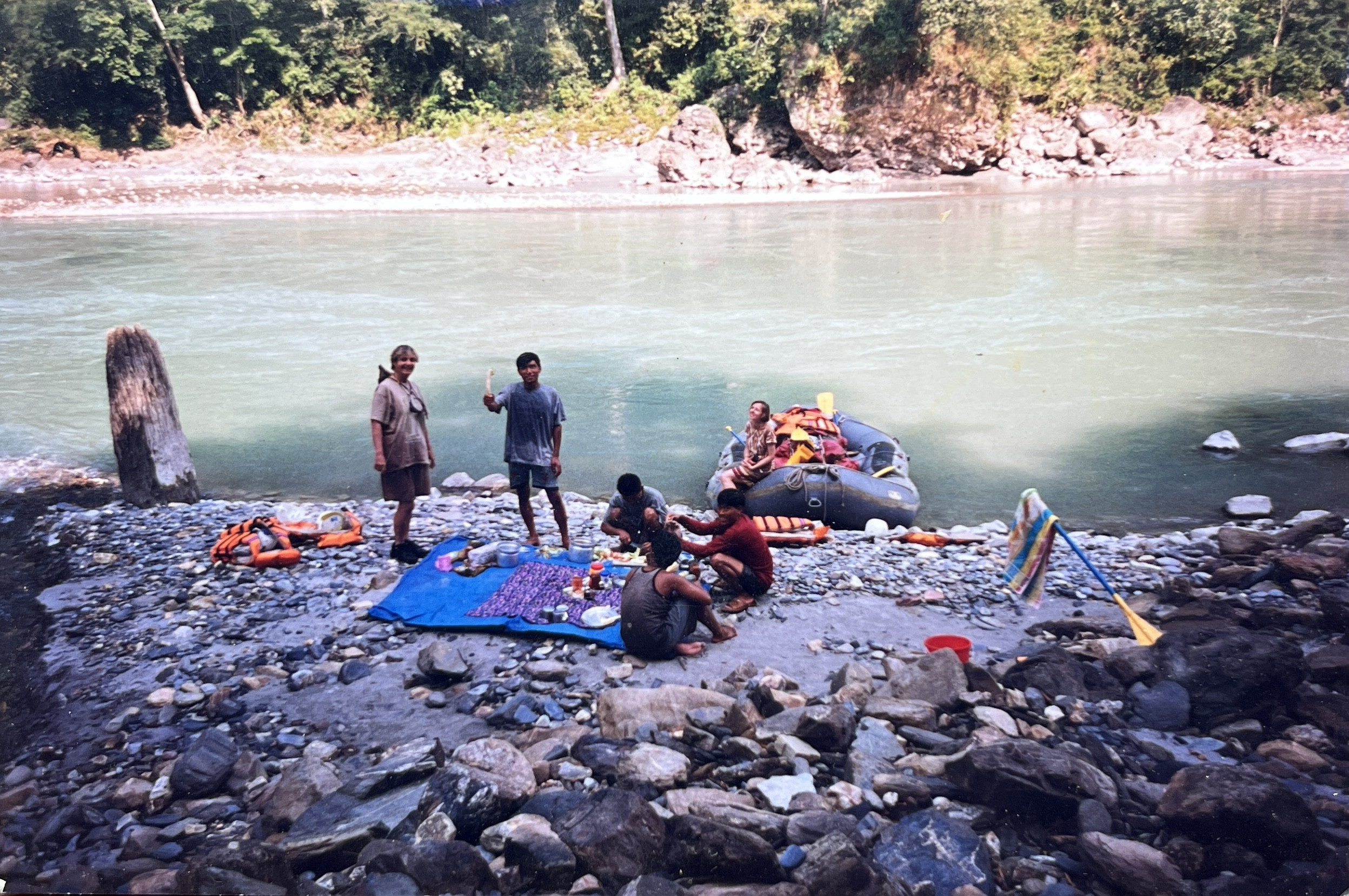
Some rivers you visit. Others, you're born beside. Hari Lal Shrestha belongs to the second kind — he grew up on the banks of the Trisuli, and in a way, everything that came after started there.
Hari Lal's family didn't have much room for extras growing up. Money was tight enough that school stopped for him at grade eight — not by choice, but by necessity. For a lot of kids, that's where the story of "what I wanted to be" quietly ends. For Hari Lal, it didn't. He'd wanted to be a river guide for as long as he could remember, and dropping out of school didn't change that. If anything, it meant he had more time to figure out how to get there.
He got his start at Rapid Adventure Nepal, and it wasn't glamorous. He washed dishes. He carried gear. He did the jobs nobody puts in a brochure. But he paid attention — to the boats, the guides, the way experienced rafters read a rapid before committing to a line. Slowly, the company noticed. Years of showing up and doing the unseen work turned into real responsibility, and eventually into the role of leader guide — running the rafting leg of Ker & Downey's tour packages, where rafting was one stop among many on a longer itinerary. It's a different kind of pressure, leading a rafting trip inside someone else's tour: the standard has to hold up against everything else on that itinerary, and Hari Lal was the one entrusted to deliver it.
It's a promotion that doesn't come from a resume. It comes from a decade of people watching you handle a boat, a client, and a bad moment on the water, and deciding they trust you with more.
Rafting in Nepal means guiding people from all over the world, and Hari Lal didn't speak English when he started. He didn't take a course for it either — he learned the way you learn most things on a river, by doing it. Listening to clients, picking up phrases, testing them out, getting corrected, trying again. It's a slower road than a classroom, but it's the kind of fluency that sticks, because every word got tested in a real conversation with a real person, usually mid-trip.
What's remarkable about Hari Lal's story is how far it's traveled from where it started. He now makes an annual trip to Japan, working as a rafting guide and trip leader there — a long way, literally and otherwise, from a dishwashing job on the banks of a Nepali river. It says something about how far real, hard-won skill can carry a person, well past the industry's usual boundaries.
The rafting business in Nepal has changed a lot over the years, and not always for the better — pricing pressure, more operators competing for the same trips, seasons that don't always guarantee steady income. Hari Lal responded to that the way people who grew up close to the land often do: he didn't abandon rafting, but he built something alongside it. He and his wife now farm vegetables in Majhimtar, Dhading, splitting his time between the adrenaline of the river and the steadier rhythm of the field.
It's not a fallback plan. It's balance — one life that runs on two different kinds of patience.
There's no single dramatic turning point in Hari Lal's story, and that's part of what makes it worth telling. It's built out of a lot of small, unglamorous decisions made consistently over thirty-plus years: showing up when the job was washing dishes, learning a language without a classroom, taking a promotion nobody handed him easily, building a second livelihood when the first one got harder.
For anyone who's ever felt like their circumstances set the ceiling on what they could become, Hari Lal's river runs a little further than that.
River Diaries continues with more voices from OarPeak's team — the guides, cooks, and porters whose stories run alongside every trip we run.